Dear Reader Namaste!
Many Greetings from RSKS India….
My Childhood, My Right: An Important Awareness Initiative for Street, Slum, and Jhuggi-Jhopdi Children
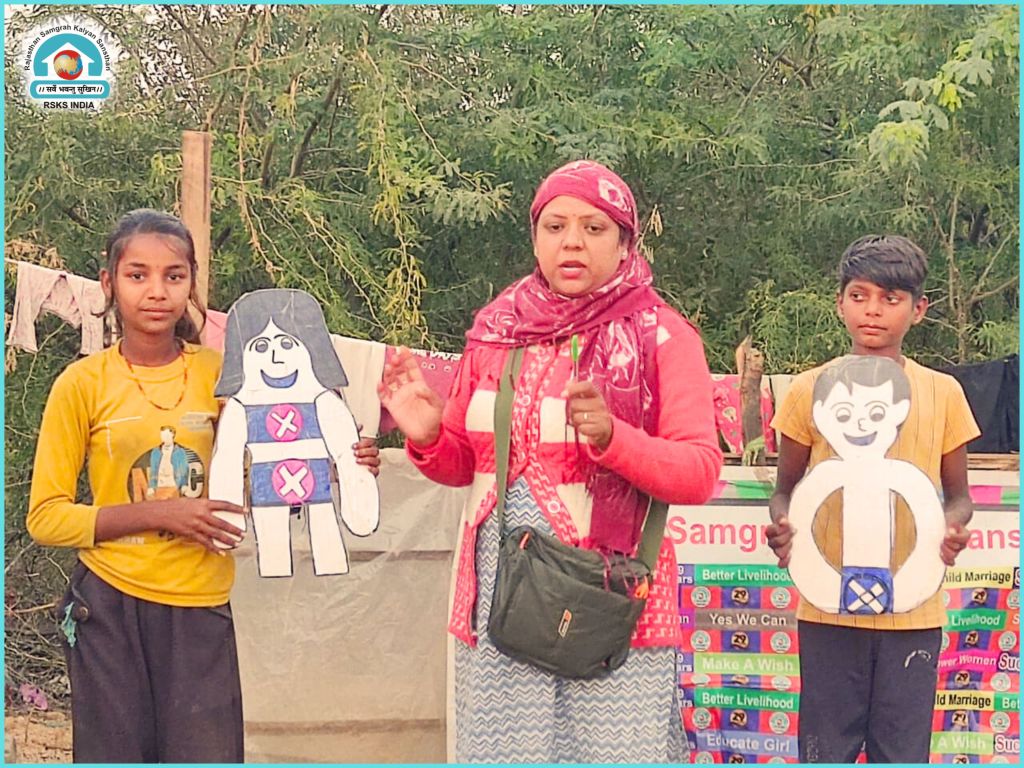
Childhood is the most precious and sensitive phase of a child’s life. It is the period when children learn, observe, understand, and shape their perception of the world. However, children living in marginalized communities—especially in street, slum, and jhuggi-jhopdi areas—face numerous risks and challenges. These children are more exposed to physical, emotional, and social vulnerabilities. Understanding this critical reality, Rajasthan Samgrah Kalyan Sansthan (RSKS) organized the “My Childhood, My Right” awareness program.
The key objective of the program was to educate children about the concepts of Good Touch and Bad Touch so they can protect themselves and respond appropriately in unsafe situations. Awareness is the first step toward ensuring a safe childhood, and this initiative was launched with that vision.
Building Safety Awareness Among Children
The program began with an open and friendly conversation. Trainers asked the children what they understood about good touch and bad touch. Many children were unsure because discussions on personal safety are often neglected in their homes and communities.
To provide clarity, experts explained that:
Good Touch is a touch that makes a child feel safe, loved, and comfortable—such as a mother’s hug, a teacher appreciating good work, or a doctor’s touch during a necessary examination.
Bad Touch is a touch that makes a child feel scared, confused, or uncomfortable. It may be forceful, inappropriate, or directed toward private parts of the body.
As the discussion continued, the children’s reactions showed growing understanding. Several children also shared their experiences, and the team listened with empathy while guiding them gently and correctly.
Teaching Children About Their Rights
The trainers emphasized that every child has the right to feel safe. They taught the children what to do if anyone touches them inappropriately:
Say “NO!” loudly and confidently
Move away from the person or situation immediately
Tell a trusted adult—such as a parent, teacher, or community elder
This “Three-Step Safety Rule” was explained in simple words to help children remember and follow it easily.
Strengthening Children’s Confidence
The program played an important role in boosting the self-confidence of the children. Many who earlier felt shy or fearful became more aware, expressive, and alert. They were reminded that their body belongs to them, and no one has the right to touch them without permission or in a way that makes them uncomfortable.
A Step Toward Positive Social Change
Initiatives like “My Childhood, My Right” not only raise awareness among children but also promote a culture of safety and empowerment within communities. Children in slum and marginalized areas often do not receive such essential guidance, making this program extremely meaningful for their well-being.
Every child deserves a protected, safe, and happy childhood. This initiative by RSKS is a commendable step toward ensuring that right. Educated, aware children become the foundation of a safer society, and this effort is truly a significant move toward a brighter, stronger future.
We highly value your feedback, suggestions, and comments on our programs. Please feel free to reach out to us at admin@rsksindia.ngo
Warm Regards,
Team RSKS India
Follow us on Facebook for regular updates. https://www.facebook.com/rsksindia/