Dear Friends Namaste !
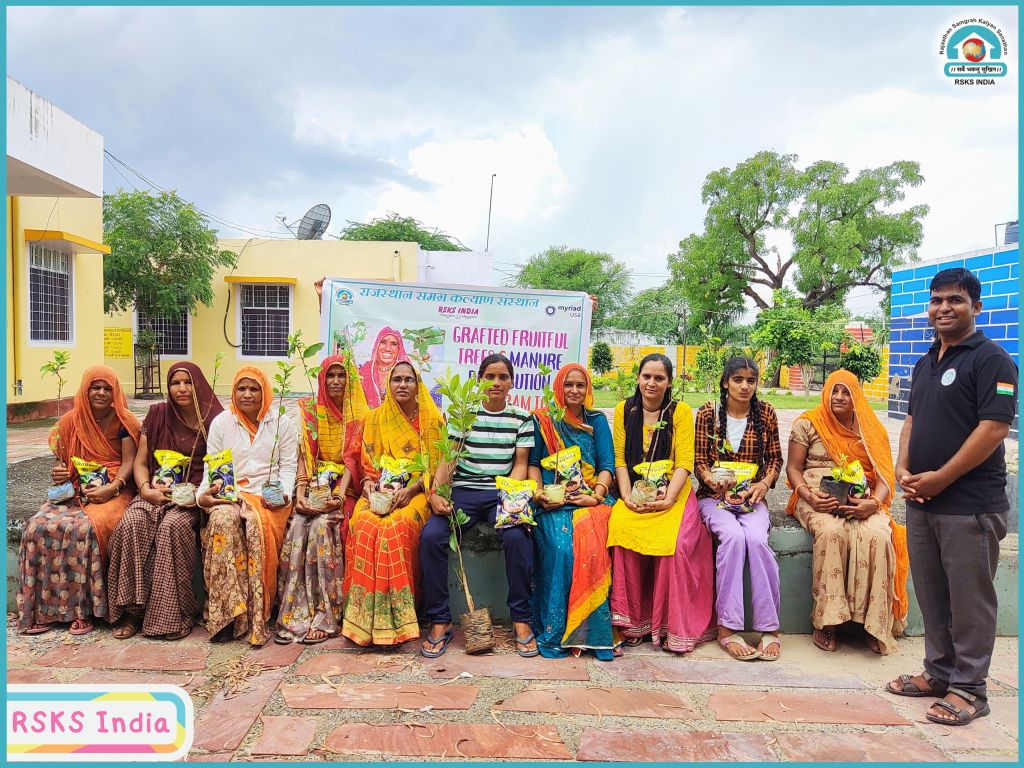
Rajasthan Samgrah Kalyan Sansthan initiated the “Plant Grafted Fruit Trees for Marginalized Families Program” to empower marginalized rural families by providing them with sustainable sources of income and improved nutrition. This program distributed a total of 455 grafted fruit trees to 65 rural families, which included a variety of fruit trees such as lemon, mango, pomegranate, guava, myrobalan, chikoo, and jamun. These fruit trees were selected for their high nutritional value and their potential to generate long-term income for the families involved. To further support the growth of these trees, 130 kg of organic manure was provided to the families, promoting healthier soil and better tree development. The RSKS team conducted workshops for the beneficiaries on proper tree care, soil management, and sustainable farming practices to ensure that the families could maintain the trees and harvest their benefits over time.
The team also conducted follow-up visits to gather feedback on the progress of the program. It was heartening to see that the trees had been successfully planted, with many of them thriving under the care of the families, demonstrating their dedication and commitment to the program. The “Plant Grafted Fruit Trees for Marginalized Families Program” has had a profound impact on the 65 rural families who participated. The distribution of these fruit trees has provided the families with a sustainable source of income, as the fruit trees will eventually produce high-value fruits that can be sold in the local markets. This extra source of income will help alleviate financial stress and improve the overall quality of life for these families.
In addition to the financial benefits, the program has also improved the nutritional status of the families. With a variety of nutritious fruits such as mango, guava, and pomegranate, the families now have access to a more diverse and healthy food supply, which will contribute to better health outcomes, particularly for children. The use of organic manure has not only ensured better growth of the trees but has also introduced sustainable farming practices to these families. The organic approach promotes environmental sustainability by reducing dependence on chemical fertilizers and improving soil health over time.
Through the follow-up visits, it was evident that the families were motivated to continue nurturing their trees, showcasing the program’s lasting impact. This initiative has not only uplifted the families financially but has also helped raise awareness about sustainable agriculture and environmental responsibility. Overall, the program has laid the foundation for a healthier, more prosperous future for the marginalized families, contributing to both their economic and social well-being.