Namaste Dear Friends!
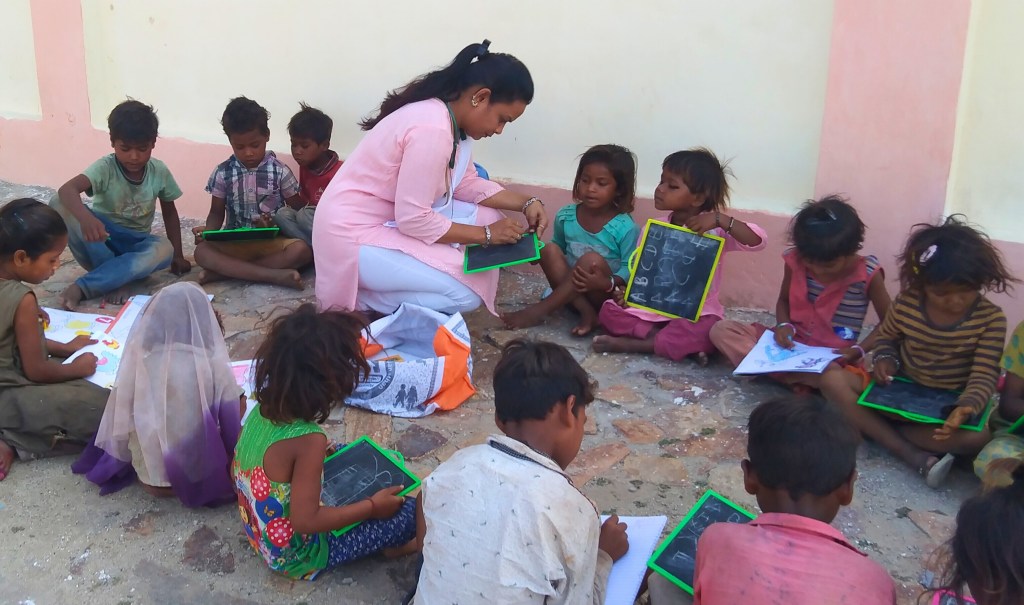
Rajasthan Samgrah Kalyan Sansthan (RSKS India) organized a comprehensive “Six Days Education For Street & Slum Children” program aimed at providing foundational education to children from slum and street communities. The program was conducted over a span of six days, with educational camps set up at different locations each day, ensuring maximum outreach to children who lack access to formal education. A total of approximately 390 children participated in these camps, receiving basic educational lessons and materials designed to engage them in learning.
The RSKS India team employed a variety of interactive teaching methods to cater to the unique needs of these children. Flip charts, group discussions, and educational activities were used to simplify key concepts in subjects like literacy, numeracy, and general knowledge. These tools made learning accessible and enjoyable for the children, many of whom had little to no prior exposure to structured education. The sessions also included group discussions, where children were encouraged to ask questions and share their thoughts, creating an interactive learning environment. To further support the children’s learning, each participant was provided with essential educational materials, including notebooks, pens, and pencils.
The “Six Days Education For Street & Slum Children” program had a significant and lasting impact on the 390 participating children. Many of these children had never experienced formal education, and this program provided them with a crucial introduction to basic academic concepts. By using engaging teaching methods like flip charts and group discussions, the program successfully captured the children’s interest, motivating them to continue learning. The interactive approach not only enhanced their understanding but also created a positive attitude toward education, breaking down barriers of fear and unfamiliarity.
The educational materials such as notebooks, pens, and pencils had a profound effect on the children’s ability to continue their studies. These tools empowered the children to practice what they learned and apply their new knowledge in their daily lives. Furthermore, the program’s emphasis on group activities and discussions helped improve the children’s social skills, building their confidence to express themselves and interact with peers.